Showing posts with label conflict. Show all posts

Tuesday, February 7, 2017

The hidden genocide of Rohingyas in Myanmar: raising voices from villages and camps in the Rakhine State.

This is a piece I have originally published in Italian for Eastonline, an Italian magazine of global news and geopolitics. While it does not talk about risk or disaster issues, we perfectly know ethnic and religious discrimination dramatically increases risk vulnerability, together with the marginalization in social, economic, and cultural life of a country. Rohingyas are among the most vulnerable people in the world, and we should continue to talk about them. All pictures and interviews are mine (December 2016).


Over one million of Rohingyas, a Burmese Muslim group living since centuries in Myanmar, suffer from 1948 (year of independence from the British crown) of discrimination and political delegitimization. Since decades, all the alternated governments -including that of the criticized Aung San Suu Kyi, a former Nobel Prize for Peace- shouldered by the armed forces and Buddhist monks, have considered Rohingyas as illegal Bengali immigrants from Bangladesh. These governments have perpetrated a "hidden genocide" through the systematic violation of citizenship and mobility rights, mass killings, arbitrary arrests, rapes, destruction and confiscation of villages. The reasons are not exclusively religious, also residing in the grabbing of Rohingyas’land to promote economic and industrial revitalization of the country, and in the need of a militarily control on the Rakhine State, in which the largest part of Rohingyas live.


After the assaults and violence by the Buddhist population in 2012, the Rohingyas fled their villages. Currently, 120,000Rohingyas live in 36 camps IDPs (Internally Displaced Persons), while 280,000 still live into villages. Rohingyas experience lack of food, water, and medical assistance. Several national and international NGOs provide humanitarian assistance to IDPs camps and villages around Sittwe (the capital of Rakhine), such as the Sittwe Program and Development Organization, who delivers food to 900 families (about 4,000 people) on behalf of the United Nations High Commissioner for Refugees. Arkar, 24, from Yangon, is the coordinator of this NGO and brings me in the area where Rohingyas are confined, located 20-minutes driving far from Sittwe (according to request by the NGO, the names of people and   of the NGO have been changed, while the names of villages have been omitted).


A rusty bar, always raised and patrolled by a visibly annoyed military, separates the Rohingya from the Burmese "normality". Beyond the bar, the main road continues straightforward. Military areas alternate to the woodland, separated from peeling walls. Some people are busy in repairing and painting the walls, others in paving the road mixing lime and placing stones. These are temporary jobs at cheap price, very slowly performed by men and women of all ages (but also children) that - Arkar says- are both Burmese and Rohingya. Together with the small trade in the villages, these jobs are among the few opportunities for these two groups to interact. From the main road, trails unpaved or covered by cobblestones reach after kilometers the villages and IDP camps, from which the Rohingya cannot get out. Those who live in the villages may move from there for visiting someone or buy something, but they are not allowed to walk on the main road. To get out from the villages they need to rent scooter-taxis and vans, often with unsustainable costs. Those living in the camps face an even more difficult condition: to enter (and exit) they must pass through two military checkpoints. At the first one, they must deliver a bribe.

Kyaw is 23 years old. The village where he lived with his parents, who ran a small shop of medicines, was destroyed in 2012. They had to escape from their place and came to the village where we meet. Recovered for days in the village where they received water and rice and sheltered at the side of a house, they took a while to rebuild a new, albeit poor, house. As everyone, Kyaw does not have a job, but since few months he is the supervisor of the food deliver by the Arkar’s NGO in the area. Kyaw has the bright face of those who would rock the world but the melancholic and innocent eyes of those who cannot because they are forced to have nothing. His story is similar to many. As Soe, 46, who until 2012 was a milk producer and owned a house with an adjoining pasture for his cattle. The Burmese government confiscated the house and the land, accusing him of not being the owner, despite all the submitted documentation attested the contrary. Being forced to sell animals, Soe found recovery in the IDP camp. At his best of knowledge, on his land there are now some government buildings.

Houses are made of bamboo, wood and makeshift materials. In the camps, most of these houses were built by NGOs. Soils are predominantly sandy and dry and do not allow productive or profitable agriculture. Rickety geese and chickens, few scrawny cows or goats rummage in the dust. In some villages, people sell meat and vegetables, or there are some poor refreshment facilities; customers are those few people who can afford it, or some military patrolling around. There is no electricity. There is no water, which is supplied by NGOs in plastic containers or rudimentary wells. In some camps, some bathrooms have been arranged: a row of wooden cubbyholes with a hole in the center. Numbered, one for each family.


The Arkar’s NGO also provides basic medical care, through a mobile clinic and a space for supporting pregnant women, but it does not cover overnight. To exit the camp, for visits or hospitalization in Sittwe hospitals, there are many difficulties. The applicant must be authorized by the government, which usually takes time for a decision; therefore, in urgent cases it is unlikely that the government will accept the request promptly. Also, applicants and families have to bribe the military to exit from camps. Furthermore, many Rohingyas do not trust about Sittwe's hospitals. They know they are unpopular among Burmese and are afraid -as it happened- that the treatment is purposely superficial or inadequate. Two young women tell me of having swelling, loss of sensitivity, and severe pain in their knees. They have difficulties in walking, and are supported by two people even walking for a few meters. Their faces are suffering. Despite the advice by the clinic, they did not go to the hospital; one of the two, having pain for over six months, says that they would rather die in Sittwe. Despite the efforts, humanitarian aids are insufficient to meet the needs of the population. The scarcity of food and water, and the poor hygienic conditions, lead to high mortality rates, especially for children. An elderly woman says that about 500 children under five years died dead in the area since 2012, 200 of which below a year, mainly for diarrhoea.

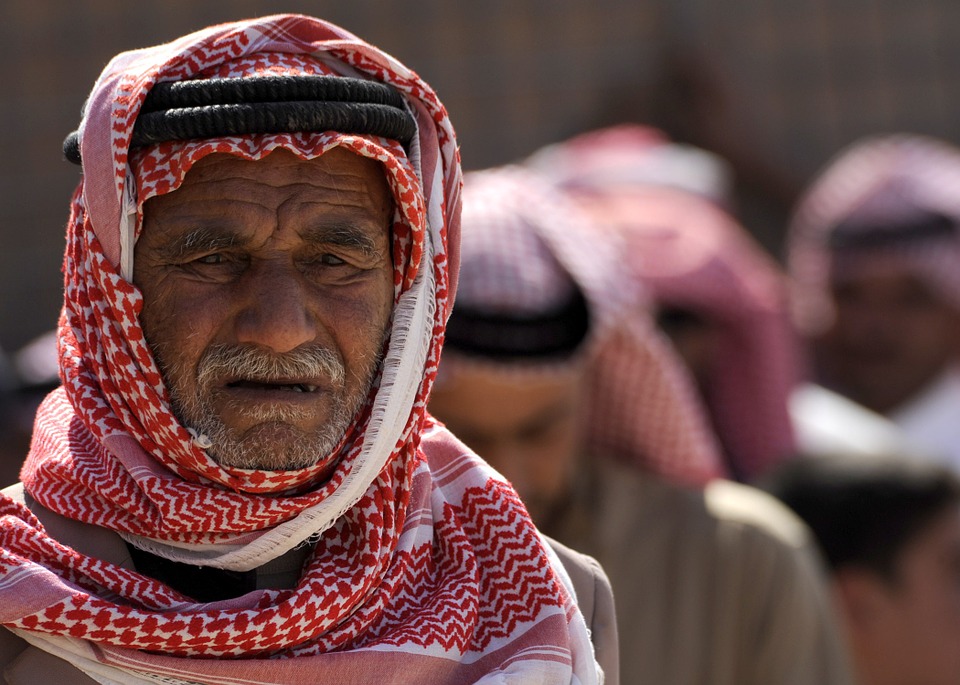
Rohingya’s faces appear to be hopeless. A man delivered a letter to me, handwritten, in which he talks about the discrimination by the Government and their suffering. He asks a redemption for his people, talks about the support by the NGO, and please doing everything possible to witness the plight of the Rohingya. To which, probably, it just remains to die.


Thursday, November 17, 2016

What Causes Disasters?

When you picture a disaster, what comes to mind? The Asian Tsunami? The Haitian Earthquake? Hurricane Katrina? What about the Syrian Civil War? Is it a disaster? Most people think of disasters in terms of the natural hazards that act as the trigger; earthquakes, cyclones, floods and tsunamis are some of the most widely perceived hazards. The prevalence of this outlook produces a myth of disasters as natural occurrences. This masks the fact that disasters occur due to complex social, political and economic choices and circumstances.

Certain cities, countries and regions are undeniably more exposed to natural hazards than others. Residents of New Zealand and Japan understand and accept the likelihood of earthquakes impacting on their lives, just as residents of the Philippines and Caribbean island nations understand and accept the likelihood of destructive typhoons/cyclones. In many cases, relocation away from a hazard is not a possibility.

However, not every individual or community or nation that faces a high likelihood of natural hazards occurring due to location is equally affected. Impact is determined by factors other than the strength or the frequency of the hazard.

Since the Industrial Revolution we have witnessed significant changes in every aspect of our society. Much is made of the "progress" of the human race since then. However, as much as the wealth and health generated has allowed our species to flourish, more people have been the victims of this progress than have been beneficiaries. Billions of people today suffer from hunger, thirst, poverty, discrimination, conflict and other injustice, often stemming directly from the "progress" of others.

Disasters are simply inevitable in this world of deep injustice, where the majority have been left behind (and in many cases left worse off) as the privileged few have moved ahead.


We can analyse people that have been left behind at different levels. Certain countries benefited greatly from colonisation and more recently, globalization. In both cases, the majority are left to serve the minority from a position of powerlessness. This translates into a widening divide between the rich and the poor. Rising inequality is not only a growing issue between countries, but between communities and classes in most nations. At the scale of the individual, personal characteristics and circumstances are key.

Right now, in 2016, it feels as though we are hurtling towards catastrophic collapse. From the refusal to take real action on climate change (and in many cases outright denial of the problem) to the power-grab by reactionary political elements, strengthened by public discontent with the neoliberal status quo. Rhetoric is becoming more divisive, more hateful, more intolerant.

Our finely tuned ecosystems are breaking down. The "progress" of the human race has resulted in great losses for all other life on earth. Our coral reefs are dying. Our oceans are being emptied. Our forests and jungles are being destroyed. Almost all agricultural diversity is being lost. Species are becoming extinct at 1000 times the background rate (without our influence). We treat everything (living and otherwise) on earth as a resource to be exploited for profit.

We are in the middle of a mass extinction and we carry on as if things have never been better. Hubris. Blissful ignorance. Dangerous delusion.


When I started on my research journey in this field, I wrongly assumed that the best I could do was discover how to manage disasters more efficiently, competently and sensitively. Of course, I quickly realised that this approach is based on a highly reactive ideology that does not offer real hope for reducing losses in the future, particularly in a world changing in the way that it is. To commit to only managing disasters seems to assume that we cannot do more.

My view is that we need to advocate for an approach based on a deeper understanding of and concern for the reasons why disasters happen, why people are vulnerable in the first place and what the human and non-human impacts of disasters are.

We must respond to the needs of our planet and all forms of life on it. We should not accept disasters as natural, or associated losses as an inevitable outcome. A disaster risk reduction approach is committed to addressing the socially constructed root causes of disasters. Scholarship in this field asserts that pre-existing vulnerability is always the main predictor of disaster impact, and efforts to reduce risk begin invariably with root causes rather than symptoms.

By finding ways to help people become less vulnerable, and opposing the political, economic and social norms that hold them back, it is still possible to envisage a world with less disasters.

Tuesday, August 30, 2016

Disasters of Imperial Power

Power, in the wrong hands, leads to disaster. 

The United States-led 'war on terror' has made the world anything but more safe and secure. Australian journalist and activist John Pilger asserts that rather than a war on terrorism, this particular war IS terrorism. Indeed, in the deeply divided Middle East, the resentment of western influence and repeated resource-related intervention solidifies. The bombings, invasions, war crimes, attempted regime change and 'state-building' have not made the powerful western backers of the destruction a whole lot of friends in the region. Suicide attacks in Iraq were unheard of before the US invasion, and are now commonplace. ISIS has arisen from a web of western-backed militia, in the grand design supposed to overthrow non-compliant leaders but now beyond control. Although terrorist attacks are still uncommon on western soil, we have seen well-publicised revenge attacks, of course most recently with France as the target. While desperate people flee the region, the West secures her borders. How willing we are to support regime change, but not take responsibility for the unthinkable losses inflicted on local populations.

Destabilisation of nations and entire regions leaves millions displaced, unemployed, hungry and thirsty, without education opportunities or any kind of security. In terms of disaster risk, imperial power continues to compound the problem. 

This power, wielded by western nations and corporations and intended to devour the resources of country after country, is something that Saddam Hussein and Muammar Gaddafi defied. Of course, the brutality of these dictators is well documented, but their countries were ultimately targeted for regime change for refusing to bow to proposed imperial masters rather than any human rights agenda. To retain any credibility for a 'humanitarian regime-change' premise, the US/UK and allies would need to not only come clean on their own human rights record, but respond appropriately to the abuses of their friends and not only their enemies. This is simply not going to happen, as weapons and goodwill continue to flow to the blatantly abusive Israel and Saudi Arabia, for example. Consolidated imperial power is 'as old as Columbus', as Pilger puts it The New Rulers of the World (p. 4), but it has taken on new robes for the 21st century. How much more destructive is this powerful club than any threat posed by ISIS, Al-Qaeda or Boko Haram?

Allied political and corporate power cares little for the vulnerable of the world, so long as they are grateful for the handouts that they receive. Decisions are purely economic, and human rights are not considered (bar as an inconvenience). The vulnerable are generally left worse of than before they were 'liberated'. 


The threat and illusion of 'necessary' endless war (remember Dick Cheney predicting 50 or more years of the 'war on terror') has been used to justify state repression and increased social control. The profiteers of disaster capitalism are gleefully rubbing their hands. Western 'patriots' say that we must blindly follow the instruction of the political elite for 'national security' and wreak eternal carnage on those countries that do not agree to serve our interests. Indeed, carnage in itself is the end game. Peace would not be profitable to the arms industry. The military industrial complex is now part of western psyche. Why are we so compliant? It does not have to be this way. Do we really subscribe to an ideology that says our lives are more valuable than those of Iraqis or Syrians? The horrors of the illegal Bush/Blair/Howard invasion of Iraq (now sold to us as a mistake rather than the obvious war crime and business decision that it was) have somehow fogged the memory of the brutal UN Security Council sanctions regime that killed half a million Iraqi children under Bush Sr. and Clinton, while barely affecting Saddam's rule. These children are the un-people of the world, and today the children of Syria and Yemen face a similar fate as collateral damage. Their deaths are 'worth it' in the scheme of things, as Madeleine Albright infamously reminded us. The delusion of imperial power is supreme.

Those annihilated by imperial power no longer face disaster risk, given their untimely demise. However, those left behind are tortured by the psychological, physical and economic impacts for generations. This risk creation runs deep. 

Richard Nixon called Indonesia 'the greatest prize in South-East Asia' and the World Bank lauded its pro-western 'reorientation' from 1967, going so far as to call it a 'model pupil' of globalization shortly before Suharto's resignation in 1998. The grisly details of another 'worthwhile' regime change are less well known, but were wholly acceptable to imperial power brokers that included the US, British and Australian governments, the IMF and World Bank and countless western corporations. Starting with a US-supplied kill list of 5000, up to a million Indonesians were murdered by the pro-western Suharto regime, while accolades flowed in from the press and western foreign offices. Australian Prime Minister Harold Holt clearly approved. "With 500,000 to a million communist sympathisers knocked off," he said, "I think it's safe to assume that a reorientation has taken place." In the wake of this genocide, the World Bank and IMF were happy to create unrepeatable debt, turn a blind eye to corruption and divide the resources of Indonesia between western corporations. A second western-backed horror in East Timor finally turned the tide on the Suharto regime in 1998.

The fate of both Indonesia and Iraq, mirrored around the world throughout the 'American Century' and today, demonstrate the destructive potential of imperial power and conquest. The human cost is unfathomable and is demonstrably far more devastating than what the west calls terrorism. 


Modern imperial power games not only kill immediately, but they significantly increase disaster risk for the most vulnerable in the societies affected. Minorities are marginalised. Inequality is actually designed to increase. Poverty is entrenched and indeed demanded under this system. Have we, as argued by the advocates of western imperialism, really witnessed such remarkable 'progress' to justify the great cost of crushing all cultures that stand in the way? When our ideas of progress include skyrocketing consumption, a throw-away consumer mindset and culture of entertainment, perhaps we have ceased to represent progress. When we measure the success of a country by GDP growth, perhaps we have ceased to represent progress.

When we see the world's most vulnerable people as collateral damage, cheap labour, a security threat or simply as 'unfortunate' (given our actions that have made them so), perhaps we have ceased to represent progress. 

Maybe we should consider the possibility, uncomfortable as it may be, that our idea of progress is as hollow as our justifications for atrocities that have enabled it.  

Sunday, September 6, 2015

The Displacement Crisis Revealing our Humanity

The world is finally waking up to a global displacement crisis. While we debate what to call the displaced, refugees...asylum seekers...migrants...the number of people seeking a new 'place' as a matter of urgency is swelling like never before in history. What is 'place' and who deserves one to call their own? Do citizens of failed states have a right to seek another place? As we consider the cauldron of violence and instability that is the Middle East, are we asking questions about the underlying causes of displacement?

Photo by Giuseppe Forino

This crisis is only likely to grow. As Australia and the UK prepare to join the US-led bombing campaign in Syria, will the politicians making the decision to kill ever more civilians be held accountable for the impact? How has this strategy worked out before in Iraq, Afghanistan and Libya? Violence is a lucrative pastime. The global arms trade generates massive revenues, and soaring military spending is justified based on the perceived risks posed globally, often as a result of intentional destabilization. Quite a business model.

However, it is not only conflict that creates displacement. Climate change is occurring whether you like science or not. Disaster impacts are evolving as societies urbanize and people adopt less sustainable living in the pursuit of 'development'. In many ways, people are become more exposed to disaster risk because of how they choose to live. The drive to 'modernize' and 'advance' inherently supports the incumbent economic system of our time. A devotion to market fundamentalism practically locks us in for whatever disasters will eventually befall our race.

Put it this way. Our economic and social order is built on the premise that limitless growth is healthy. Anything that might challenge this premise is dismissed as problematic, idealistic and unreasonable. Solutions that involve equality and justice for all are labeled socialist. This belief system taken to the extreme brings us humanitarian bombing and coal is good for humanity. Orwell was spot on; blind, selfish, self-absorbed consumers want to believe that 'war is peace, freedom is slavery, ignorance is strength'.

It is great to see the outpouring of empathy for the Syrian refugees reaching Europe. It gives me hope that most of us really do care about others. Perhaps it takes a picture and the tragic story of a dead toddler to really wake us up from our busy, stressed out existence. My hope is that this crisis will create thousands of activists around the world. There are huge ethical and moral dilemmas to consider, but not a lot of time to take action.

The world certainly needs to come up with rapid and collective solutions to this humanitarian crisis, but we need to be careful not to apply a band-aid to a deep laceration. Increasing refugee intake is commendable, but are we prepared to interrogate the problem at its source?

Thursday, April 23, 2015

The rising challenge to entitlement: disasters, migration and western values

2015 is a year of global agreements regarding climate change, disaster risk reduction and sustainable development. The new frameworks proposed will invariably require innovative strategies for change. But is society ready to accept change and adaptation for the good of future generations? Change invariably involves sacrifice. The belief that our very way of life is being eroded by the demands of environmentalists is prevalent, but we must consider who this narrative serves. The ‘risk’ of change to those who have accumulated power, wealth and resources under the status quo must not be ignored. An assessment of ruling-class risk may indeed help us to contextualise some of the important debate of 2015.

Entitled to Succeed

If schooling has taught us anything, it is that success manifests as wealth, power, achievements and accolades. ‘Work hard and succeed`, they say. ‘If you don't succeed, you didn't try hard enough’. Nobody likes to admit that disadvantage runs deep and 'failure' according to our system is more accurately predicted by socio-economic indicators than by work ethic. Those 'born to rule' hate to admit that privilege is a factor and will point to rags to riches success stories that supposedly prove that a meritocracy exists. However, the systemic inequality that is all around us challenges the very values of a free society that our democracies uphold.


What, in fact, are 'western values'? Freedom, justice, compassion? The freedom to accumulate. Retributive justice. Conditional compassion. Perhaps it's the expectation that someone be employed and pays taxes (so that our government can fund war and distribute private sector welfare).

In these times of austerity, most Western governments favour neoliberal economic ideologies and, as a consequence, policies that target the least at fault for economic crisis and the least able to afford cuts, taxes and levies. Underpinning this agenda is an insidious belief that the poor are lazy and the disabled are frauds. We are told that to help such poor souls, we must impose some sort of punishment. It’s the moral thing to do, after all.

Outsiders:

How does our perception of western values (and the incentives and punishments attached to these values) affect our attitude towards those outside our borders, and indeed towards the ‘others’ within our borders? It's hard to know what our values truly are, if you consider the rhetoric of our elected leaders. They preach social justice while passing legislation to persecute the vulnerable. Perhaps that is what social justice means to such ideologues. How do we view more than two billion in poverty worldwide, populations in Iraq, Afghanistan, Syria and Ukraine exposed to ongoing conflict or the disproportionate number of people in developing countries vulnerable to climate change?


Despite all of our advances, every second child on the planet lives in poverty. Of the world’s 2.2 billion children there are 1 billion in poverty. 18,000 children (under 5) still die every day from poverty, hunger and preventable disease. As UNICEF articulated in 2000, these children,

die quietly in some of the poorest villages on earth, far removed from the scrutiny and the conscience of the world. Being meek and weak in life makes these dying multitudes even more invisible in death.”

Do we consider that many of the problems felt beyond our borders persist as a result of inequality? Indeed, systemic inequality is capitalized upon by western corporate and governmental entities to maintain growth and accumulate wealth for the 1%. However unintentionally, we in the west are born with a perceived entitlement to benefit from this inequality, established hundreds of years ago, largely through slavery and the global domination and destruction of indigenous people groups.

Climate change, migration and disaster risk reduction:


"people who are socially, economically, culturally, politically, institutionally or otherwise marginalised are especially vulnerable to climate change."

Those most vulnerable; children, women, the elderly and the disabled, located in developing countries, already suffer disproportionately due to conflict and disaster. Needless to say, programs that address the underlying causes of this vulnerability have a significant impact on long term disaster risk. However, the current near-consensus towards technocratic solutions to poverty does little to reduce growing inequality and lack of individual freedom. Indeed, the solutions imposed by development experts often serve to increase vulnerability among the most marginalised in a society.

Extreme events force many more people from their homes than conflict, yet few governments are facing up to the potential of future mass migration. As of end-2013, 51.2million people were forcibly displaced worldwide. We cannot be entirely sure what the consequences will be of planetary boundaries being exceeded, but it is hardly a stretch to imagine that more people than ever would be forced to seek safe refuge from violent conflicts, stronger and more frequent natural hazards and food and water shortages.

Photo credit: worldmaritimenews

Perhaps the Hunger Games narrative isn’t so far-fetched.

Risk reduction holds a different meaning for the wealthy and for the poor. As renewable energy alternatives become accessible to all, entire industries are at risk. The opponents of freely available sustainable energy will fight on for their ‘right’ to collect profit in the years to come. Global agreements like the Trans-Pacific Partnership will attempt to reinforce structures designed purely for profit and domination. Whether it is energy generation or food production - sustainability and resilience for you and I come at a cost to the global elite. Sustainability demands that we moderate/reduce consumption (largely procure from established corporate elite) while resilience empowers ‘people’ to cope for themselves (thus reducing reliance upon elite derived/powered systems and products).

Sameness or Variety:

No amount of positivity or optimism prevents people dying of thirst and starvation daily. Meanwhile, the west gets fatter. We place our faith in business, in foreign aid, in development, to provide the solution. Are we wrong to assume that this system, created by corporations, banks and government, will act in the interests of humanity? We so easily swallow the narrative that says that ‘the others’ are out to ruin life as we know it- single mothers, unemployed youth, the disabled and asylum seekers. But does our existence really depend on protecting ourselves from these vulnerable groups? The lie is pervasive. Our leaders tell us to just believe, over and over again.


While 3 million people turn out to advocate for free speech in Paris, there is little outrage against what Joseph Conrad called "the merry dance of death and trade." As sections of Western society become more and more polarised and marginalised, the ability to empathise with ‘others’ is rapidly eroded, within and beyond our borders.

Current global systems (economic/social/moral etc.) are ideologically flawed; they assign power, wealth and resources to the few at a detriment to the many. These systems are also highly contemptuous of change. A healthy system should naturally transition through periods of creative destruction, allowing innovation and creativity to flourish. Instead, we have been programmed to favour growth and conservation at all costs, while protecting the status quo.

Voltaire and Inequality

Can we envisage a world where no one starves to death or dies of treatable disease in any given day, and where everyone has access to life’s basic necessities? Do the poor choose to remain poor?

‘The comfort of the rich depends on an abundant supply of the poor.’ - Voltaire

If we truly do aspire to a more equitable and sustainable way of life, what needs to happen to make it a reality? Can current global systems deliver on such a vision or is such thinking ultimately utopian? The current status quo gives us a scenario where the poorest 10% of humanity account for just 0.5% ofconsumption while the wealthiest 10% account for 59%. The demand for global resources and strain on our environment does not arise due to the actions or inactions of the global poor. Economic distress is never caused by families on social welfare, it is caused by banks and corporations that effectively benefit from publicly sourced subsidies (source?). What is the tipping point for injustice, the last straw before moral outrage?


Is the very (western) way of life that we protect and treasure part of the global malaise? Are we so devoted to materialism, consumerism and individualism (the religions of the West, as defined by Russell Brand) that we would cast off all responsibility for the consequences of the flawed ideological underpinnings of empire and globalisation?

Voltaire’s oft-quoted and adapted words, ‘the best is the enemy of the good,’ in the poem La Begueule, are commonly used to justify failed systems or as pretext for trivial solutions. The correct meaning was in fact to warn against greed, envy and lack of gratitude. It was upon such a misconstrued meaning of Voltaire’s words that the Obama administration oversaw the robbery of US taxpayers to feed a reckless and greedy banking sector, as Nobel prize-winning economist Joseph Stiglitz points out. Consider this on a global scale...does the current economic system ‘require’ an abundant supply of the poor? Is growing inequality a positive thing, as argued by Kevin O’Leary? A 2014 report by Oxfam states that the richest 85 people in the world hold the same amount of wealth as the poorer half of humanity. Inequality is increasing all across the globe. The clear warning is that,

“when wealth captures government policymaking, the rules bend to favour the rich, often to the detriment of everyone else.”

Poverty. Inequality. War. The military industrial complex. Human trafficking. Crony capitalism. Humanity requires drastic reorganisation. However, those who benefit from sameness will not make way for variety without resistance.


Tuesday, August 19, 2014

‘Stop the boats’...but for how long? Mounting Humanitarian Crises and Australia’s Asylum Seekers


Around the world, when natural and man-made hazards meet human vulnerability there are devastating consequences. The impacts of climate change, rapid urbanisation and a growing economic divide will undoubtedly force more people into conditions of extreme disaster risk. It is inevitable that many of these people will attempt to find safe and secure living conditions for their families, away from exposure to disaster risk.

At the same time we are witnessing an explosion of conflict and instability on the global stage. Across multiple continents, people groups are divided across religious, cultural and ideological lines, and as a consequence violent conflict rages. Adding fuel to the fire, spending on global militarisation has grown exponentially in recent times. The impact of this 'arming-to-the-teeth' is felt around the world where such weapons are put into use, usually far away from countries that produce them.

The number of people displaced by conflict and persecution grows daily, as a constant flow of refugees are forced from countries like Iraq and Syria. Those displaced are mainly hosted in adjacent countries but are often hoping for permanent settlement in a safe country, fleeing conflict, persecution and an absence of human rights. In the coming years people will not only flee conditions of disaster risk. They will flee climate change impacts. They will flee conflict and persecution. They will flee poverty and inequality. It is clear that we are facing mounting humanitarian crises in the years to come.

What are the key drivers of these conditions humanity finds herself trapped in? Lack of education? Corruption? Geopolitics? Neoliberal economics? Crony capitalism?


As the international community faces up to an age of human displacement, Australia stands determined to prevent anyone reaching its shores, no matter what they may be fleeing from. A shift towards a military-style border defence operation since the Coalition government took office in 2013, as well as the offshore detention policy carried over from Labour, has drawn widespread criticism from national/global watchdogs. The use of Manus Island and Nauru as a ‘deterrent’ or ‘punishment’ for seeking asylum from the conditions outlined above has brought Australia under the spotlight in the international press. Will cruelty against the victims of global humanitarian crises that arrive in Australia do anything to prevent more and more asylum seekers being produced in future?

Has cruelty ‘stopped the boats’? Or is there a military operation massively invested in locating, stopping and returning the boats? How is the horror of offshore detention making any difference, apart from diminishing Australia’s reputation on the international stage? Is the current cruelty a ‘necessary evil’? What are the other options? Instead of considering a more compassionate way to participate in solving the global displacement crisis, Australia is focused on shipping off its existing refugees arrived by boat, while ensuring that there are no further arrivals by pushing boats back to Indonesia and refouling asylum seekers to Sri Lanka

Ask yourself this: If you feared for your own and your family’s safety, would you not use whatever means you had to protect them? If you had the financial means to secure passage to another country to seek asylum, would you instead choose to seek out a refugee camp and wait for 5-10 years for resettlement? We must not ignore the suffering of those asylum seekers with means, simply because there are others without means to do the same thing.

The question is, therefore; for how long can Australia maintain a 'push-back' policy in the face of increasing human displacement, due to mounting humanitarian crises caused by multiple hazards, both rapid and slow-onset, as well as increasingly chronic human vulnerability and global economic inequality?